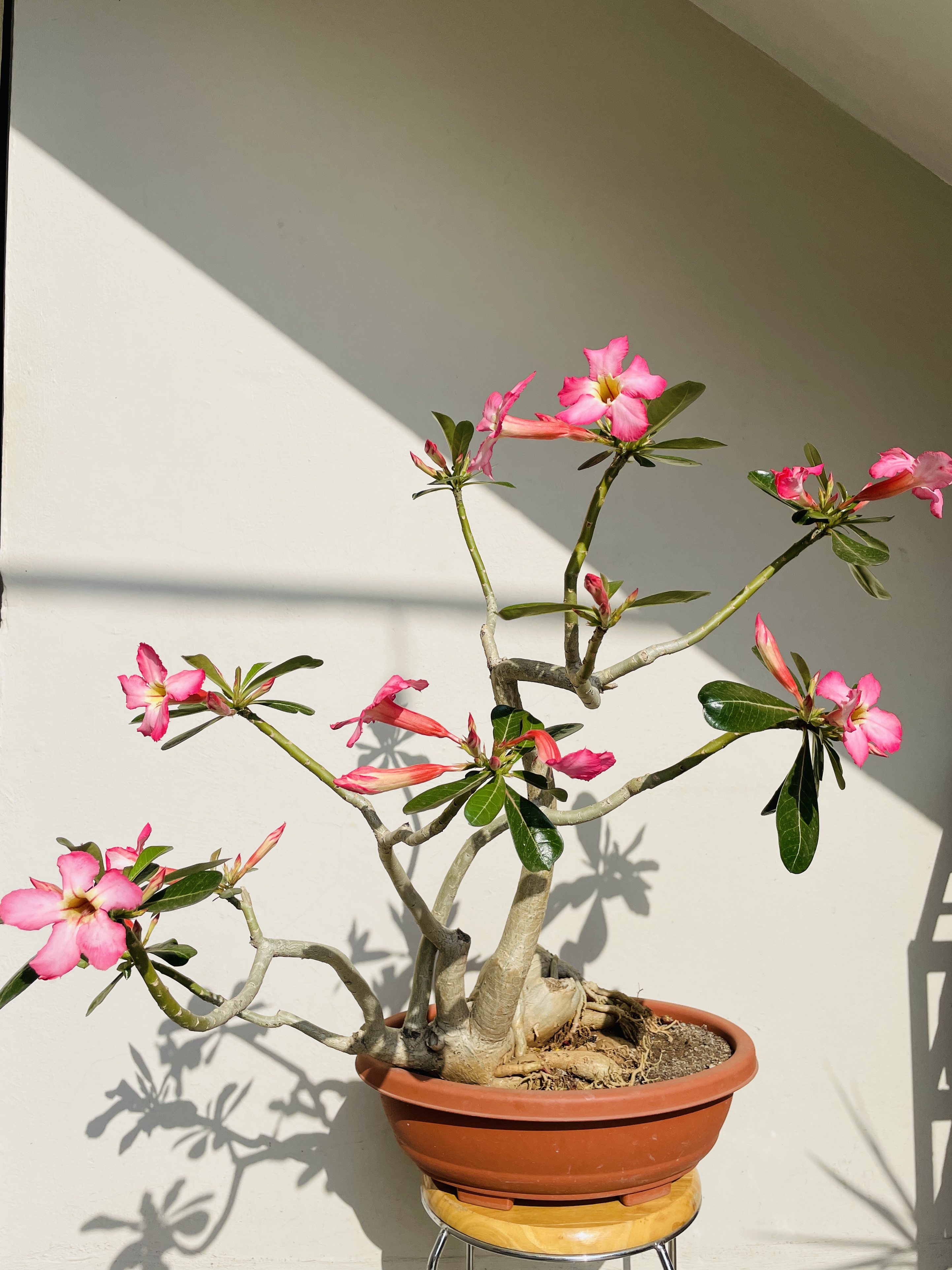
Adenium: The Sun-Loving Desert Rose for Your Sunny Balcony 🌸
Vanika Plants
Vanika Plants
If you're looking for a plant that brings the beauty of tropical blooms and the structural elegance of a bonsai to your space, the Adenium is an absolute showstopper. Commonly known as the Desert Rose, this striking flowering succulent is loved for its thick, sculptural trunk and vibrant, trumpet-shaped flowers.
Whether you're styling a sunny balcony, a bright patio, or an outdoor garden, the Adenium brings a touch of exotic beauty to your home while being surprisingly easy to care for.
🌿 About the Adenium
The Adenium (Adenium obesum) is a striking succulent shrub native to the Sahel regions of Africa and the Arabian Peninsula. It is most famous for its caudex—a thick, swollen base and trunk that stores water, giving it a unique, bonsai-like appearance.
During its blooming season, it produces stunning, vibrant flowers in shades of pink, red, white, and sometimes even yellow or purple. Because it is a desert native, the Adenium is incredibly resilient, drought-tolerant, and perfectly suited to thrive in our sunny Indore climate.
🌱 Complete Care Guide
☀️ Light Requirements
The Adenium is a true sun-lover and needs full, direct sunlight to thrive and bloom.
1. Place it in the sunniest spot available, such as a south-facing or west-facing balcony or patio.
2. It needs at least 5–6 hours of direct sunlight every day to produce flowers.
3. If kept indoors, it must be placed right next to your brightest, sunniest window.
4. Insufficient light will lead to a leggy plant and a lack of blooms.
Best Location: Sunny balconies, open terraces, outdoor gardens, and bright patios.
💧 Watering
Because the Adenium stores water in its thick caudex, it functions much like a cactus. Overwatering is the most common way to harm this plant.
Watering Tips
- Water only when the soil has completely dried out all the way through.
- During the hot summer months, you may need to water it once a week.
- During winter, when the plant goes dormant, reduce watering to once every 3–4 weeks (or just enough to keep the trunk from shrinking).
- When you do water, soak the soil thoroughly until water runs out the drainage holes.
Signs of Overwatering:
- A soft, squishy trunk (caudex)
- Yellowing leaves that drop rapidly
- Root rot and blackening stems
Signs of Underwatering:
- A shriveled or wrinkly trunk
- Dry, crispy leaves dropping off
Always remember:
It is much better to underwater an Adenium than to overwater it.
🌱 Soil
Excellent drainage is absolutely critical for a healthy Desert Rose.
Use:
- Cactus and succulent potting mix
- A highly porous, gritty, well-draining soil
You can prepare your own mix using:
- 40% coarse sand or pumice
- 30% garden soil
- 30% coco peat, perlite, or cinder
A shallow pot with large drainage holes (like a bonsai pot) is highly recommended to prevent water from pooling at the roots.
🌡️ Temperature
Ideal temperature:
25°C–35°C+
The Adenium thrives in the heat and loves the warm temperatures of central India.
Protect it from:
- Cold drafts
- Frost or temperatures dropping below 10°C (bring it indoors or shelter it during cold winter nights)
- Heavy monsoon rains (if potted outside, ensure the soil drains instantly so it doesn't sit in water)
💦 Humidity
The Adenium prefers dry, arid conditions.
- No misting is required.
- High humidity paired with poor air circulation can lead to fungal issues, so keep it in a well-ventilated, breezy spot.
🌿 Fertilizer
Feed during the active growing and blooming season (spring and summer).
Recommended:
- A liquid fertilizer high in phosphorus to encourage blooming.
- Apply once a month during the growing season.
Avoid fertilizing during the winter dormancy period.
🌼 Growth & Appearance
The Adenium is a slow but steady grower.
Typical size:
- Height: Can reach 2–5 feet in containers over several years.
- Flowers: Beautiful 2-inch blooms that can last for weeks.
Note: The sap of the Adenium is toxic if ingested and can cause skin irritation, so it is best to wear gloves when pruning and keep the plant out of reach of pets and small children.
🌱 Benefits of the Adenium
🌿 Drought Tolerant
Its water-storing caudex makes it incredibly forgiving if you forget to water it, perfect for busy plant parents.
🌸 Spectacular Blooms
Provides an incredible pop of color with minimal effort, flowering abundantly in the heat.
🎨 Sculptural Beauty
No two Adeniums look exactly alike. The unique, swollen trunk makes it a living piece of art.
🌞 Sun Champion
While many plants wilt in the harsh afternoon sun, the Adenium thrives, making it perfect for exposed, sunny balconies.
✂️ Repotting
Repot every 2–3 years or when:
- The roots outgrow the current pot.
- You want to expose more of the beautiful caudex. (When repotting, lift the plant 1-2 inches higher out of the soil than it was previously to showcase the thick roots!).
The best time to repot is during the warm spring or early summer months.
🌱 Propagation
Adeniums can be propagated by seeds or stem cuttings.
By Stem Cuttings:
1. Take a 5-inch cutting from a healthy branch.
2. Let the cutting dry and callous over in a shaded spot for 2-3 days.
3. Plant it in well-draining cactus mix and water sparingly until roots form.
(Note: Plants grown from cuttings usually will not develop the thick, swollen base that seed-grown plants do, but they will still produce beautiful flowers!)
⚠️ Common Problems
Squishy Trunk
The number one sign of overwatering and root rot. Stop watering immediately and check the roots.
Dropping Leaves in Winter
This is completely normal! Adeniums often go dormant in winter and drop their leaves. Reduce watering and wait for spring.
No Flowers
Usually caused by insufficient sunlight or a lack of phosphorus in the soil. Move it to a sunnier spot.
⭐ Plant Parent Tip
To get that classic, beautiful "bonsai" look, lift your Adenium slightly every time you repot it. By exposing the top layer of the thick roots above the soil line, they will harden off and become part of the sculptural trunk!
🏡 Styling Ideas
The Adenium looks beautiful in:
- Shallow terracotta bowls
- Ceramic bonsai pots
- Rustic concrete planters
- Minimalist black or white pots that let the bright flowers pop
Pair it with decorative pebbles or river stones on top of the soil for a clean, finished look.
💚 Why Choose the Adenium?
If you want a plant that loves the sun, requires very little water, and rewards you with stunning flowers and a sculptural trunk, the Adenium is unmatched. It is a striking, low-maintenance companion for any sun-drenched outdoor space.
Bring home an Adenium and watch this living sculpture bloom!
🌿 Vanika Plants Recommendation
At Vanika Plants, we love the Adenium because it brings a rugged, desert elegance combined with breathtaking floral displays. Whether you're decorating a sunny balcony or adding a statement piece to your terrace garden, the Desert Rose is a bold, beautiful choice.