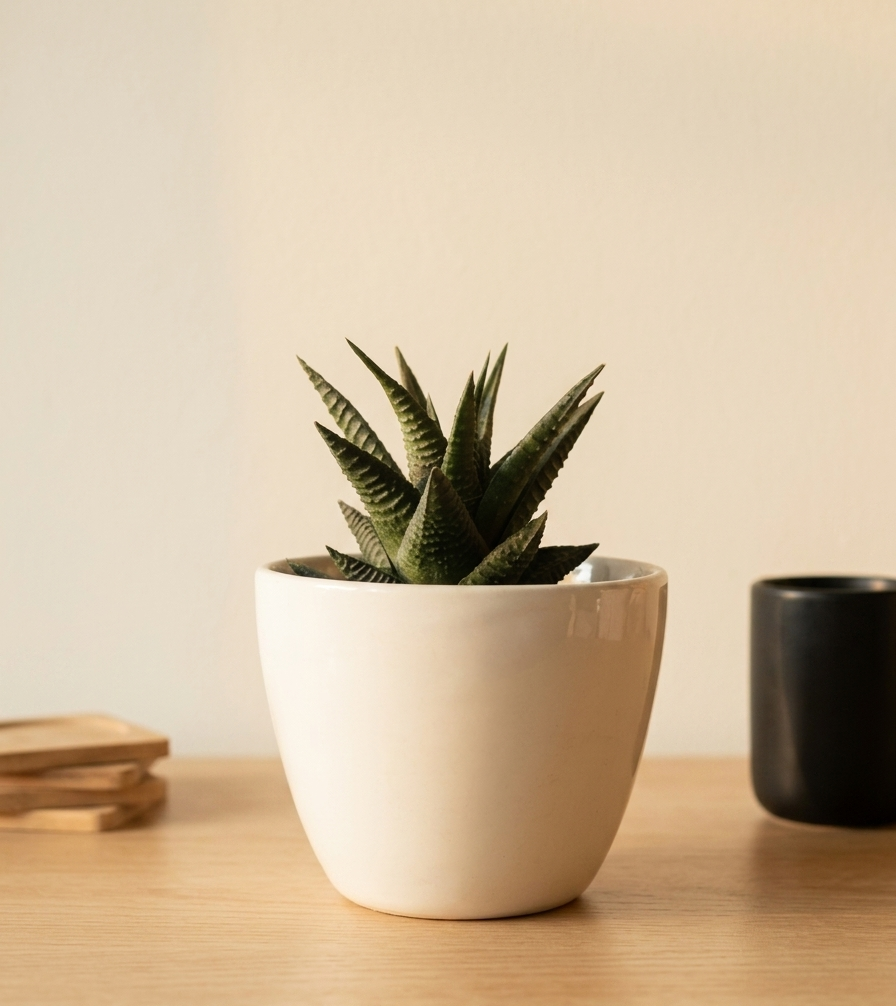
Haworthia: The Stylish Low-Maintenance Succulent for Every Space 🌵
Vanika Plants
Vanika Plants
If you're looking for an indoor plant that's stylish, easy to care for, and perfect for beginners, Haworthia is an excellent choice. With its compact size, striking geometric leaf patterns, and minimal care requirements, this beautiful succulent has become a favorite among plant lovers.
Whether you're decorating your home, office desk, study table, or gifting someone a plant, Haworthia brings natural beauty without demanding much attention.
🌿 About Haworthia
Haworthia is a small, slow-growing succulent native to the arid regions of South Africa. It belongs to the Asphodelaceae family and is admired for its thick, fleshy leaves that grow in elegant rosette formations.
Many Haworthia varieties feature unique white stripes, raised bumps, or translucent leaf tips that make them stand out from other succulents. Their compact growth habit makes them perfect for small ceramic pots, terrariums, shelves, office desks, bedside tables, and windowsills.
Unlike many succulents, Haworthia adapts well to indoor environments and thrives in bright, indirect light, making it one of the easiest houseplants to grow.
🌱 Complete Care Guide
☀️ Light Requirements
Haworthia loves bright, indirect sunlight.
1. Place it near an east- or north-facing window.
2. Morning sunlight is beneficial.
3. Avoid harsh afternoon sun, which may scorch the leaves.
4. Can tolerate lower light conditions better than many other succulents.
Best Location: Living room, office desk, bedroom, study table, or windowsill with filtered sunlight.
💧 Watering
Haworthia stores water inside its thick leaves, making it highly drought-tolerant.
Watering Tips
- Water only when the soil has completely dried out.
- During summer, watering every 2–3 weeks is usually sufficient.
- During winter, reduce watering to once every 3–4 weeks.
- Never allow water to sit in the pot or saucer.
Signs of Overwatering:
- Soft or mushy leaves
- Yellowing foliage
- Root rot
- Drooping plant
Signs of Underwatering:
- Wrinkled leaves
- Slightly thinner foliage
- Dry appearance
Always remember:
When in doubt, wait another day before watering.
🌱 Soil
Good drainage is essential.
Use:
- Cactus potting mix
- Succulent soil
- Sandy, well-draining potting mix
You can also prepare your own mix using:
- 40% garden soil
- 30% coarse sand
- 30% perlite or coco chips
A pot with drainage holes is highly recommended.
🌡️ Temperature
Ideal temperature:
18°C–30°C
Haworthia enjoys warm indoor temperatures.
Protect it from:
- Frost
- Temperatures below 10°C
- Sudden cold drafts
💦 Humidity
Haworthia prefers normal indoor humidity.
Unlike tropical plants:
- No misting is required.
- Excess humidity may increase the risk of fungal diseases.
🌿 Fertilizer
Feed during the active growing season.
Recommended:
- Diluted cactus or succulent fertilizer
- Once every 2–3 months during spring and summer
Avoid fertilizing during winter when the plant's growth naturally slows.
🌼 Growth & Appearance
Haworthia grows slowly but steadily.
Typical size:
- Height: 3–6 inches
- Width: 4–8 inches
Its symmetrical rosette shape makes it one of the most decorative succulents.
Some mature plants may even produce delicate white flowers on long flower stalks during spring or summer.
🌱 Benefits of Haworthia
🌿 Beginner Friendly
Perfect for first-time plant parents because it requires very little maintenance.
🏡 Ideal for Small Spaces
Its compact size makes it suitable for:
- Apartments
- Offices
- Work desks
- Bookshelves
- Coffee tables
- Bedroom décor
💧 Drought Tolerant
Stores water inside its leaves, making it forgiving if you occasionally forget to water it.
🎨 Beautiful Home Décor
Its unique leaf patterns and architectural form complement both modern and traditional interiors.
🌱 Long Living
With proper care, Haworthia can thrive for many years.
🌍 Easy to Maintain
Requires minimal watering, little fertilizer, and very little pruning.
✂️ Repotting
Repot every 2–3 years or when:
- The plant outgrows its container.
- Soil becomes compact.
- Offsets (baby plants) fill the pot.
Choose a pot only slightly larger than the previous one.
🌱 Propagation
Haworthia is easy to propagate.
The most common method is by separating offsets (baby plants).
Steps:
1. Remove the plant carefully.
2. Separate healthy offsets with roots attached.
3. Let the cut dry for a day.
4. Plant in fresh succulent soil.
5. Water lightly after a few days.
⚠️ Common Problems
Yellow Leaves - Usually caused by overwatering.
Brown Tips - Can result from too much direct sunlight or underwatering.
Soft Leaves - Often indicate root rot due to excess moisture.
Leggy Growth - Caused by insufficient light.
⭐ Plant Parent Tip
The biggest secret to a healthy Haworthia is less water, more patience.
Because it stores moisture in its leaves, it is much happier being slightly dry than constantly wet.
🏡 Styling Ideas
Haworthia looks beautiful in:
- Ceramic pots
- Terracotta planters
- Concrete planters
- Minimal white pots
- Wooden shelves
- Office desks
- Coffee tables
- Bedroom side tables
- Study corners
Pair it with decorative stones or pebbles for an elegant modern look.
💚 Why Choose Haworthia?
Whether you're new to indoor gardening or already a plant enthusiast, Haworthia is a wonderful addition to your collection. Its sculptural beauty, resilience, and effortless care make it one of the best indoor succulents for modern homes.
Bring home a Haworthia and enjoy greenery that stays beautiful with minimal effort.
🌿 Vanika Plants Recommendation
At Vanika Plants, we love Haworthia because it perfectly combines beauty, simplicity, and durability. Whether you're decorating your home, gifting a loved one, or starting your indoor garden, Haworthia is a timeless choice.