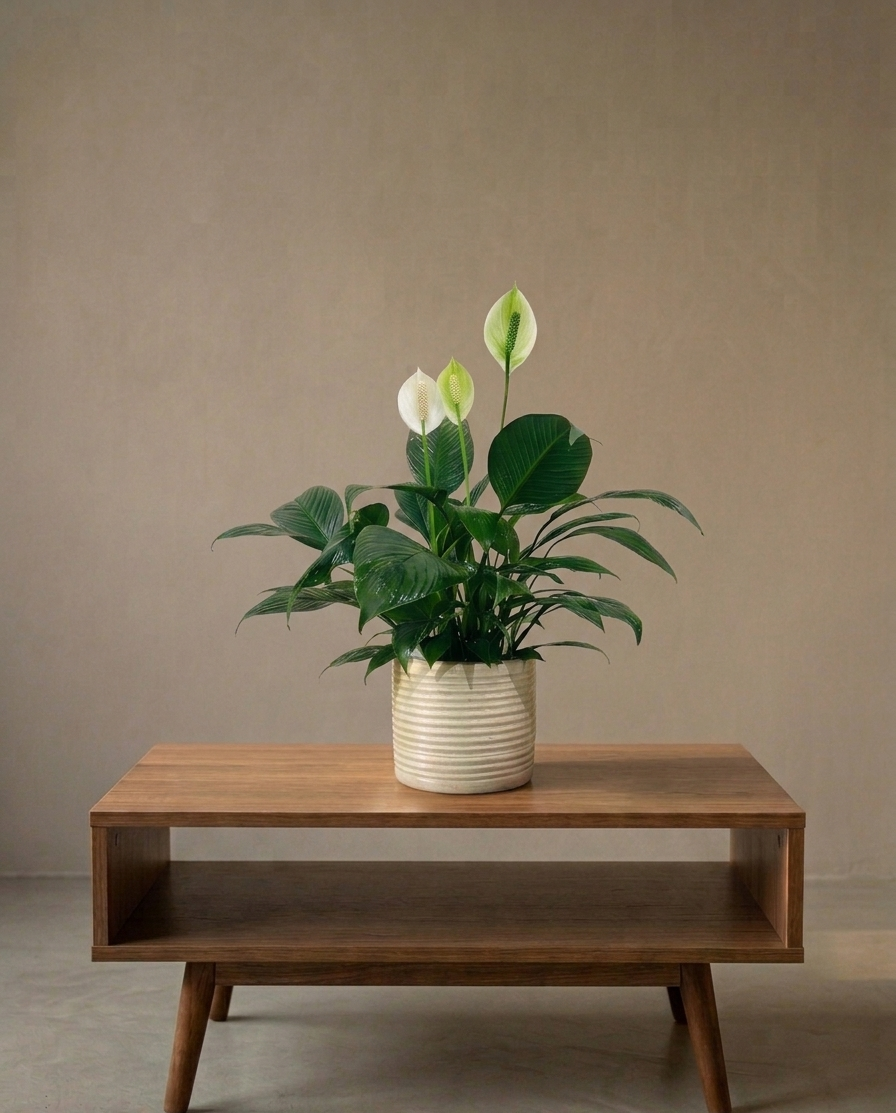
Peace Lily (Spathiphyllum): The Elegant Air Purifier for Your Home 🕊️
Vanika Plants
Vanika Plants
If you're looking for a plant that combines beauty, simplicity, and health benefits, the Peace Lily (Spathiphyllum) is one of the best choices. Known for its lush green foliage and graceful white blooms, this timeless houseplant brings elegance and tranquility to any indoor space.
Whether you're decorating your living room, bedroom, office, or gifting a plant to someone special, the Peace Lily is a perfect companion that rewards you with stunning foliage and cleaner air.
🌿 About Peace Lily
The Peace Lily, scientifically known as Spathiphyllum, is a tropical evergreen plant native to the rainforests of Central and South America. Despite its name, it is not a true lily but belongs to the Araceae family.
It is admired for its glossy dark-green leaves and distinctive white flowers, known as spathes, that symbolize peace, purity, and prosperity.
One of the reasons Peace Lily remains a favorite among indoor gardeners is its ability to thrive in low-light conditions while requiring relatively little maintenance.
🌱 Complete Care Guide
☀️ Light Requirements
Peace Lily thrives in bright, indirect light.
While it can adapt to lower light conditions, adequate filtered light encourages better growth and flowering.
Best Lighting Conditions
1. Bright, indirect sunlight
2. East-facing windows
3. North-facing windows
4. Filtered sunlight through curtains
Avoid
1. Direct afternoon sunlight
2. Harsh summer sun
3. Prolonged exposure to intense heat
Too much direct sunlight may scorch the leaves and cause brown patches.
💧 Watering
Peace Lily enjoys consistently moist soil but does not like sitting in water.
Watering Tips
1. Water when the top 1–2 inches of soil feels dry.
2. Keep the soil evenly moist.
3. Reduce watering during winter.
4. Ensure proper drainage.
One unique feature of Peace Lily is that it visibly droops when thirsty, making it easy to know when it needs water.
Signs of Overwatering
1. Yellow leaves
2. Soft stems
3. Root rot
4. Fungus gnats
Signs of Underwatering
1. Drooping leaves
2. Dry soil
3. Brown leaf edges
After watering, a thirsty Peace Lily often recovers within a few hours.
🌱 Soil
Peace Lily prefers a rich, well-draining soil mix.
A good potting mix should contain:
1. Coco peat
2. Compost
3. Garden soil
4. Perlite or sand for drainage
The soil should retain some moisture without becoming soggy.
🌡️ Temperature
Peace Lily thrives in warm indoor conditions.
Ideal Temperature 18°C–30°C
Avoid exposing the plant to:
1. Cold drafts
2. Air conditioners blowing directly on the plant
3. Temperatures below 12°C
Sudden temperature fluctuations can stress the plant and affect flowering.
💦 Humidity
As a tropical plant, Peace Lily loves humidity.
Ways to Increase Humidity
1. Mist occasionally
2. Place near other plants
3. Use a pebble tray
4. Keep in naturally humid rooms
Higher humidity encourages lush foliage and healthy growth.
🌿 Fertilizer
Feed your Peace Lily during the growing season.
Recommended Feeding Schedule
1. Once every month during spring and summer
2. Use a balanced liquid fertilizer
3. Dilute fertilizer to half strength
Avoid over-fertilizing, as excess salts may burn the roots.
🌼 Flowers & Appearance
The most recognizable feature of Peace Lily is its elegant white bloom.
The "flower" actually consists of:
1. A white spathe (modified leaf)
2. A cream-colored spadix (flower spike)
Under proper conditions, Peace Lilies may bloom several times throughout the year.
Typical Size
- Height: 1–4 feet
- Width: 1–3 feet
Larger varieties can become impressive statement plants for living rooms and offices.
🌱 Benefits of Peace Lily
🌬️ Natural Air Purifier
Peace Lily is widely appreciated for helping improve indoor air quality by filtering common pollutants from indoor environments.
🏡 Enhances Home Décor
Its glossy green foliage and elegant white flowers complement:
- Modern interiors
- Traditional homes
- Minimalist spaces
- Offices
- Reception areas
😌 Creates a Calming Atmosphere
The plant's graceful appearance is often associated with peace, relaxation, and positive energy.
🌿 Low Maintenance
Despite its luxurious appearance, Peace Lily is easy to care for and suitable for beginners.
💧 Increases Indoor Humidity
The plant releases moisture into the air through transpiration, helping improve indoor comfort.
🎁 Perfect Gift Plant
Peace Lily makes a thoughtful gift for:
- Housewarming ceremonies
- Birthdays
- Festivals
- Corporate gifting
- New office setups
✂️ Pruning & Maintenance
Regular maintenance helps keep your Peace Lily looking healthy.
Remove
- Yellow leaves
- Brown leaf tips
- Spent flowers
- Damaged foliage
Cleaning the leaves occasionally also helps the plant absorb more light.
🌱 Repotting
Repot your Peace Lily every 1–2 years or when:
- Roots emerge from drainage holes
- Growth slows significantly
- The plant becomes root-bound
Choose a pot that is 1–2 inches larger than the current one.
🌱 Propagation
Peace Lily is commonly propagated through division.
Steps
1. Remove the plant from its pot.
2. Gently separate healthy root clumps.
3. Ensure each division has roots and leaves.
4. Plant in fresh potting mix.
5. Water lightly.
New plants establish quickly under proper conditions.
⚠️ Common Problems
Yellow Leaves:- Usually caused by:
- Overwatering
- Poor drainage
- Excess fertilizer
Brown Leaf Tips:- Can occur due to:
- Low humidity
- Fluoride or chlorine in tap water
- Underwatering
No Flowers:- Possible reasons
- Insufficient light
- Lack of nutrients
- Immature plant
Drooping Leaves:- Most commonly caused by
- Thirst
- Overwatering
- Root stress
⭐ Plant Parent Tip
Peace Lily communicates clearly with its leaves.
If the leaves start drooping, check the soil moisture before watering. Most often, the plant simply needs a drink and will quickly regain its upright appearance.
🏡 Styling Ideas
Peace Lily looks stunning in:
- Ceramic planters
- Terracotta pots
- Decorative indoor planters
- Office desk planters
- Living room corners
- Bedroom side tables
- Entryway displays
For a premium look, pair it with neutral-colored pots and natural wooden décor.
💚 Why Choose Peace Lily?
Peace Lily is more than just a houseplant—it's a symbol of serenity, beauty, and well-being. Its elegant white blooms, lush foliage, and easy-care nature make it one of the most rewarding indoor plants for both beginners and experienced plant lovers.
Whether you're looking to brighten your home, purify your indoor environment, or add a touch of natural elegance, Peace Lily is an excellent choice.
🌿 Vanika Plants Recommendation
At Vanika Plants, we love Peace Lily for its timeless beauty and effortless care. Its lush foliage and graceful blooms make it a perfect addition to homes, offices, and gifting collections.
Bring home a Peace Lily and experience the perfect blend of nature, elegance, and freshness.